




NFU challenges Tesco to commit to British farming
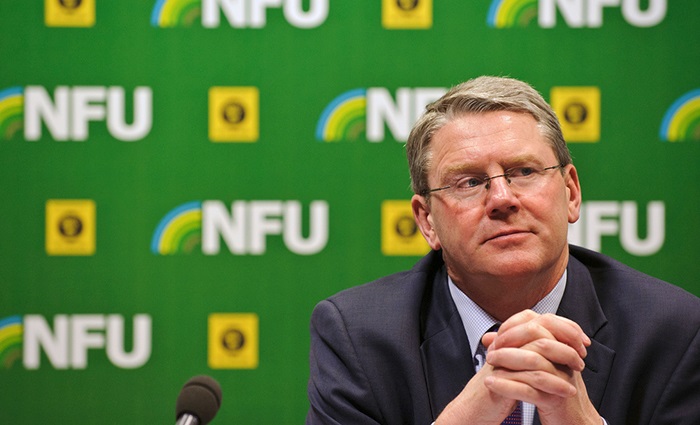
The National Farmers' Union has called on Tesco to help bring profitability back to British farming after the commercial director for the retailer, Kevin Grace, addressed NFU Council today.
In a follow-up to Tesco chief executive Philip Clark’s commitment to offer two-year contracts and shorter supply chains at NFU Conference in February, Grace reiterated the retailer’s long-term commitment to British farming. He also said there was a huge opportunity now to create a supply chain to be proud of.
Sainsbury’s said it was committed to doubling the amount of British food sold in its stores by 2020.
New research shows customers want to see more British food on supermarket shelves with 82% of shoppers more likely to buy traceable food produced on British farms.
The fear of eating contaminated beef has caused many shoppers to be wary of all meat sold in supermarkets.
The most recent results of horsemeat substitution tests in beef products confirm that inattentive retailers have allowed both consumers and beef farmers to be the victims of a giant, cross-EU, food fraud that has dented the confidence of the former – and forfeit the latter untold millions of pounds in lost income.
The National Beef Association said it was 'furious' that consumers and farmers have been so badly let down by supermarkets and food policing agencies operating at both EU and national level.
"We already knew that a massive criminal deception has been inflicted on consumers and farmers by cheats in the red meat trade and that the retailers who purchased so many, suspiciously cheap, contaminated beef products without initiating checks have played their part in a Europe-wide scandal of quite staggering proportions too," explained the NBA’s national director, Chris Mallon.
"The naivety surrounding the trading of horsemeat was appalling. We know now that around 350,000 tonnes of the product, which is five times cheaper than fresh beef, circulated within the EU each year - and that this has offered an irresistible, on-going, opportunity for swindlers and frauds to substitute it for beef and cream off illicit profits that could easily total a billion pounds."
“Who knows exactly how much horsemeat has been eaten instead of beef? Who knows how many consumers have purchased beef products in good faith only to find, much later, they have been the innocent victims of a cynical, red meat industry, fraud?”
The NBA said retailers must play their part. Evidence already assembled points to many offending meat companies being unable to resist the lure of super-cheap horsemeat because supermarkets, and other retail chains, discounted some beef products to levels that made it impossible for suppliers to earn a profit.
"Back in January we heard retailers, all of them household names, promise to eradicate the threat of horsemeat substitution by raising their scrutiny levels, shortening their supply chains, and making sure their suppliers received proper payment for orders delivered," said Mallon.
"However some of this appears to have been soft talk and hot air because a BrandView.com retail survey published just last week shows that since January 16th the UK’s four biggest retailers have failed to lift the price of 81 per cent of their beef products and another four per cent are actually cheaper."
"Our very clear view is that unless Tesco, Asda, Sainsbury’s and Morissons raise all their retail beef prices in line with the improving value of UK cattle it is inevitable that suppliers will make losses on their orders."
"This is an unsustainable situation which, as we now know, could lead to supply integrity problems in the future. It is important to consumers that everyone involved in the supply of their UK beef is able to maintain their business without cutting unnecessary costs and are therefore able to continue to deliver the consumer’s first choice product in future."
But responding to today’s address, NFU President Peter Kendall said: "We’ve heard Tesco re-affirm its pledges today and that they’ve began work on making those changes but the clear message from my members is the need to return a fair price for the food they produce.
"No-one is in this business to lose money and so my challenge to Tesco is this; British farming has got to be profitable. The only way that farmers can make the long-term investments that are so desperately needed is by making a profit that allows for that reinvestment in their business. For this to happen we must have trust and confidence that the commitments being offered by Tesco will deliver.
"From their pledge, we need to see Tesco’s commitment to source more of their meat closer to home, and on longer-term contacts, put into practice. And there also has to be a real tangible increase in the amount of cattle, lamb and poultry meat sourced from British farmers as well as commitments made to other sector such as dairy and horticulture.
"For our part we will help Tesco talk to farmers, to make long-term commitments that aid profitability and build stronger farmer groups as soon as possible. It is important we hear about the progress being made and work together to make the most of the fantastic opportunity that does exist for everyone, and which Kevin Grace has talked about today.
"By getting things right today will help to ensure we have it right for tomorrow. With this in mind, we are also working with Tesco to encourage young people into agriculture by exploring scholarship schemes. By ensuring short supply chains, direct from British farms to retailer, we can get on the right track, ensure the long-term profitability of British farming, and put more British food on British plates."