




Maximise ley performance
With high cereal prices providing a temptation to put grassland under the plough, it is all the more important to achieve the most from new grass leys, and experts are advising that clover has a big role to play.
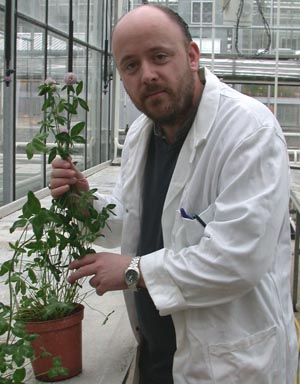
Dr Michael Abberton of the Institute of Grassland and Environmental Research (IGER) explains that adding clover to grass seed mixes can bring huge benefits. "A big incentive for including clover has to be the substantial amount of money that farmers can save," Michael says.
Currently costing £200 per tonne, nitrogen fertiliser is becoming more expensive all the time. "Because clover has nitrogen fixing properties, farmers can use considerably less nitrogen fertiliser or, in some cases, none at all," he claims, commenting that in the past lower nitrogen prices and confusion about clover management may have put people off.
"Weed control can be an issue, as it is important to find the right treatments that remove weeds without harming clover," he adds.
Geoff Hull, from crop protection firm United Phosphorus, advises that weeds don't have to be a problem. "Contrary to widespread belief, there is a solution to difficult weeds like chickweed in clover inclusive leys," he says, commenting that Alistell from the UPL Clovercare range provides reliable, clover-safe control of this and a range of other annual weeds.
Controlling chickweed up to 150mm high or across if applied whilst weeds are actively growing, Alistell is active on contact with some root activity, and also has the benefit of controlling fat hen, charlock, common poppy and redshank.
"With weeds in check, clover can thrive and will help to improve overall performance of grass leys," says Geoff.
Dr Abberton adds that adding clover to grass seed mix is likely to improve animal performance. "Clover significantly improves the quality of forage. It has a higher nutritive value due to its high protein content, and contains more minerals than grass alone," he says.
Palatability is also improved as clover retains better digestibility throughout the season. "There is a greater intake, which leads to higher weight gain and milk production in dairy cows," says Michael, adding that there is also evidence that the quality of meat and milk can be enhanced.