




Egg sales down as bird flu grips the Chinese poultry sector
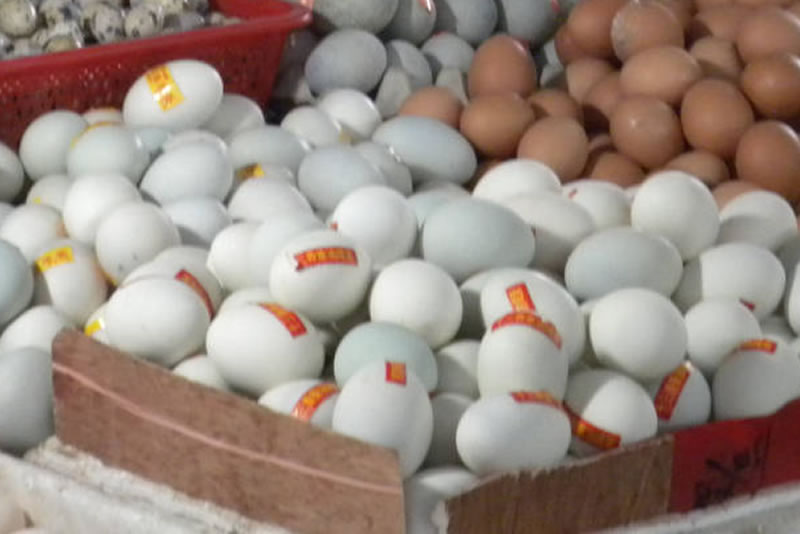
Evidence has emerged to suggest that egg sales in China may have been impacted by the bird flu outbreak that has so far claimed the lives of 21 people.
More than 100 people have been infected in the outbreak and the Chinese poultry sector as a whole is reporting losses of $1.6 billion following the slaughter of thousands of birds and the closure of live poultry markets in Shanghai and Beijing to try to control the infection. China Daily has been reporting from one farm in East China where, it says, there has been a dramatic fall in sales of both chicken and eggs. Its stack of unsold eggs is piling up at the rate of 100 kilograms a day, according to the report.
This appears to fulfil a forecast given to world egg industry leaders gathered in Madrid recently that it was only a matter of time before eggs were implicated in the Chinese bird flu outbreak. The warning was issued by Dr. Vincent Covello, a recognised international authority on crisis management. Dr Covello, founder and director of the Centre for Risk Communication in New York, raised his concerns during a speech to delegates at the International Egg Commission (IEC) conference in Madrid. He was outlining how a crisis like the AI outbreak in China could have a devastating impact in business as well as human terms if media coverage and information management were handled badly. He said that pictures in the news of people in protective suits putting dead chickens in bags could ultimately result in consumers changing their buying habits. "Eggs have not yet been implicated but you can be sure that it will come," he told delegates in Madrid.
Members of the Chinese delegation told the Ranger that they had seen no effect on egg consumption or demand for eggs since the onset of the outbreak, although the reports in the media now appear to indicate that sales may have been hit.
Dr Covello told the Ranger that he had already started to see small signs of questions being raised about eggs online in the wake of the crisis. "There are already blog sites that are raising questions," he said. He said that after their initial concentration on the outbreak, itself, reporters would inevitably start asking questions about chicken and chicken products. "What is the egg industry saying? Given the history of China over transparency, can we believe what they say? There are already suggestions on blogs that people shouldn't be eating raw eggs."
The World Health Organisation (WHO) called for calm and the head of China's National Health and Family Planning Commission, Li Bin, said she was confident that authorities could contain the virus. Alejandro Thiermann, president of the Terrestrial Animal Health Standards Commission at the World Organisation for Animal Health (OIE) told IEC delegates in Madrid that the Chinese authorities had reacted well to the outbreak. "China has been extremely rapid to notify, to communicate and also to
work public health, animal health at a national level," he said.
Mr Thiermann said that such viruses were unstable and the one identified in China was particularly unstable. The H7N9 strain did not cause severe illness in chickens or other birds, which, he said, made surveillance much more difficult. He said it was difficult to look for dead or ill birds to do testing, but China was carrying out "very aggressive" surveillance, looking at poultry, wild birds and pigs for evidence of the virus. "There is no evidence of human to human transmission. It is most likely that these people acquired the infection from birds - I say most likely because the information is yet to come."
Mr Thiermann said that surveillance and bio-security were essential to prevent the virus spreading. He said that China had its own diagnostic laboratories to work on the outbreak and it was sharing information with the OIE so that the entire scientific community could come up with a way to deal with the virus.
Dr Tjeerd Kimman of the Central Veterinary Institute in the Netherlands told IEC delegates that many people would find it difficult to believe that such a low pathogenic strain of the virus in birds could kill human beings.
He recounted the effects of an outbreak of AI in Holland 10 years ago in which only one person - a vet involved in dealing with the outbreak - died, but which resulted in the loss of 31 million laying birds. He said that 255 farms had been infected in the outbreak. The direct cost to Dutch industry was put at 250 million Euros and indirect costs were estimated to be as much as one billion Euros, he said.
Dr Kimman said that the key to dealing effectively with any outbreak of AI was early detection and being well prepared - prepared even for the unexpected. He said that between 18 and 24 per cent of AI infection was spread through the air, between seven and 10 per cent was spread through professional contacts, but as much as 70 per cent was still unexplained. "Are we prepared for the next epidemic; are we prepared for the unexpected?" said Dr Kimman, who said that in most member countries of the IEC veterinary resources were becoming overstretched. He said it was vital to have effective veterinary services to deal with AI outbreaks.
One sobering statistic for the free rage sector quoted by Dr Kimman was that free range flocks were 11 times more susceptible to AI infection than cage birds. He said that, given society's wish for free range egg production, it was necessary to develop ways of managing this at the same time as preventing the introduction and spread of AI.
Whilst the strain of the virus involved in the outbreak in China is proving to be of little danger to birds, the Chinese authorities still killed more than 20,000 chickens from a live poultry trading zone in Shanghai in an effort to deal with the threatened spread of the virus. A number of other cities across the country have announced trading suspensions. It is reports of such measures being carried out that Dr Covello believes will inevitably lead to questions being raised about the implications for egg consumption.
In order to allay such concerns, the egg industry should be prepared to deal with the doubts that would be raised about eggs, he said. Information - and misinformation - could spread very rapidly through modern media. Going back 20 years it would take the public 24 hours to obtain information through the media, 10 years ago it took four hours and today it took four minutes. It was necessary to be able to handle such media coverage effectively in order to prevent lasting damage.